
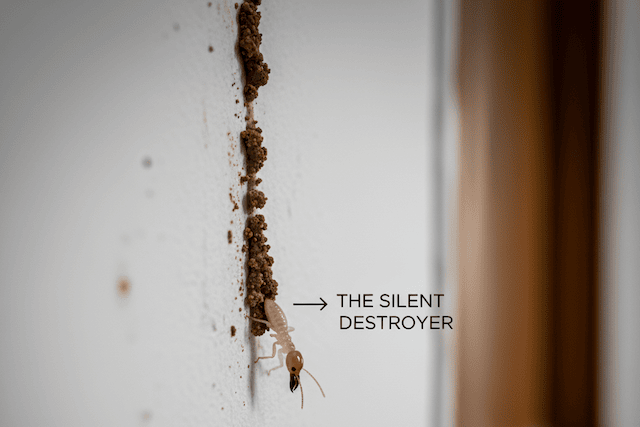
You’ve just spotted it: a thin, brown, muddy line snaking its way up your pristine HDB wall. Your heart sinks. Could it be… termites? In an HDB flat? While many assume termites are only a problem for landed properties or old colonial bungalows, the reality is that subterranean termites are a significant and common threat to homes across Singapore, including high-rise apartments.
That “muddy line” you’re seeing isn’t just dirt; it’s a termite mud tube, a clear and present danger sign that demands immediate action.
What Exactly Are These “Termite Tunnels” (Mud Tubes)?
Imagine a bustling highway, meticulously constructed by tiny architects, designed to protect them from predators and the harsh environment. That’s essentially what a termite mud tube is.
Subterranean termites, the most destructive termite species in Singapore (primarily Coptotermes gestroi), live underground in moist soil. However, their food source – the cellulose found in wood, paper, and even some fabrics – is often above ground, inside our homes. To bridge this gap and reach their delicious meal, they construct these protective tunnels.
Here’s why they build them:
- Protection from Predators: Ants, their primary adversaries, are relentless hunters. Mud tubes provide a safe, enclosed pathway, shielding termites from detection and attack.
- Protection from the Environment: Singapore’s climate, while humid, can still be too dry or exposed for these soft-bodied insects. The mud tubes maintain the high humidity and stable temperature that termites need to survive as they forage.
- Pathway to Food: These tubes act as dedicated superhighways, allowing thousands of worker termites to travel back and forth between their underground colony and your home’s valuable wooden structures.
Mud tubes are typically made from soil particles, wood fragments, and the termites’ saliva and faeces. They can vary in thickness from a pencil lead to a garden hose, depending on the number of termites using them and how established the foraging route is. You might find them running along skirting boards, door frames, window sills, or even up concrete walls leading to wooden fixtures like built-in cabinets, parquet flooring, or door frames.
Why Are Termites in My HDB Flat? I Don’t Have a Garden!
This is a common and understandable question. While landed properties with direct soil contact might seem more vulnerable, HDB flats are far from immune. Here’s how subterranean termites can infest an apartment unit:
- Shared Structures: Termites can travel through shared wall voids, utility conduits, plumbing chases, and expansion joints that run vertically through the building, originating from the ground floor or even a neighbouring unit.
- Ground-Level Entry: For lower-floor units, termites can easily migrate from landscaped areas, nearby trees, or even from the ground beneath the building’s foundation.
- Moisture Sources: Termites are highly attracted to moisture. Leaky pipes, damp areas under sinks, constantly wet bathrooms, or even condensation can draw termites towards your unit, providing the ideal conditions for them to thrive and establish themselves.
- Infested Items: Less commonly, but still possible, drywood termites (another type, though mud tubes are typically for subterranean) can be introduced via infested second-hand furniture or wooden items brought into the home.
The key takeaway is that any home with wooden elements and a consistent moisture source can be a target.
I’ve Found Mud Tubes: What to Do Immediately
Seeing mud tubes is a definitive sign of an active termite infestation. Do NOT ignore it. Termites work silently and relentlessly, and the longer you wait, the more extensive and costly the damage will be.
Here’s your action plan:
- Do NOT Disturb the Tubes (Initially): Your first instinct might be to scrape them off. Resist this urge! While removing them might make you feel better temporarily, it simply causes the termites to retreat and build new tunnels elsewhere – often deeper within your walls, making them harder to detect and treat. Leave them intact for now; they are crucial evidence for a pest control professional.
- Confirm the Activity: Gently tap the wood or wall near the mud tubes. Listen for a hollow sound. If you see tiny, creamy-white insects when a tube is accidentally broken, you’ve confirmed active termites.
- Document Everything: Take clear photos and videos of the mud tubes and any other signs of termite activity (e.g., damaged wood, discarded wings). Note the exact location and time of discovery. This information will be invaluable for the professionals.
- Contact a Professional Termite Control Company IMMEDIATELY: This is the most critical step. Termite control is not a DIY job. Over-the-counter sprays are ineffective and can disperse the colony, making treatment more difficult and prolonging the infestation. You need a company with experience in Singaporean HDBs and subterranean termites.
- Be Prepared for an Inspection: When the professionals arrive, they will conduct a thorough inspection of your entire unit, not just where you saw the tubes. They will look for other signs of activity, pinpoint entry points, and assess the extent of the infestation.
- Understand the Treatment Options: For subterranean termites in HDBs, common treatments include:
- Baiting Systems: These involve placing bait stations around your property or directly on mud tubes. Worker termites feed on the bait, share it with the colony, and gradually eliminate the entire population, including the queen. This is often preferred for internal HDB infestations due to its non-invasive nature.
- Liquid Termiticide Barriers: For external areas or ground-floor units, a chemical barrier might be applied to the soil around the building’s perimeter to prevent entry.
- Direct Chemical Injection: In some cases, termiticide might be injected directly into infested wooden structures or wall voids.
Prevention is Better Than Cure (Post-Treatment)
Once the immediate threat is handled, implement long-term prevention strategies:
- Eliminate Moisture: Fix leaky pipes, ensure good ventilation in bathrooms, and avoid leaving wet areas.
- Remove Wood-to-Ground Contact: Ensure no wooden furniture or fixtures directly touch soil outside, even if it’s a small balcony garden.
- Regular Inspections: Consider engaging a professional for annual or biannual termite inspections, especially if you live on lower floors or have previously had an infestation.
Seeing termite mud tubes on your HDB wall is alarming, but it’s also a wake-up call. By acting quickly and engaging professional help, you can protect your home from significant damage and costly repairs. Don’t let these tiny destroyers silently eat away at your biggest investment.